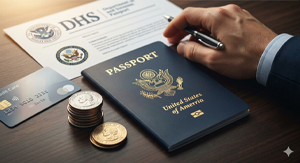
The U.S. State Department has finalized a major update to the Diversity Immigrant Visa (DV) lottery regulations, effective April 10, 2026.
Under the new rule, which applies starting with the DV-2027 program year, every entrant must provide detailed passport information and upload an official scan of their passport’s biographic and signature pages.
These changes – along with a newly imposed $1 registration fee per entry – are aimed at reducing fraud and improving the integrity of the lottery.
Passport Requirement (Old vs. New)
Previous procedure: Under the old regulations, DV lottery entrants submitted only basic biographic and education information; a passport was not required at the entry stage.
Applicants simply filled out Form DS-5501 with their name, birth date, education, and other personal details.
Certain Americans and countries with special laws were exempt from ever needing passports to travel to the U.S., but in general a passport was only needed after being selected in the lottery. The new rule fundamentally changes this practice.
New requirements: Beginning with DV-2027, each primary applicant must supply valid passport details on the entry form and upload a digital scan of the passport pages. Key elements include:
- Valid passport data: The entrant must enter the passport country, passport number, and expiration date for a valid, unexpired passport from his or her country of nationality. If the entrant is exempt, they must explicitly indicate that on the form.
- Passport scan upload: A clear digital scan of the passport’s biographic page (with photo) and signature page must be uploaded when submitting the DV entry. The final rule specifies that these scans be in JPEG format (no PDFs) and under the size limit set by the entry system.
In short, the initial entry stage has shifted from a simple questionnaire to a more document-driven process. Applicants must scan and upload official ID pages, which means having a passport ready in advance. Any missing passport information (without qualifying for an exemption) will result in an incomplete entry that the system will not accept.
Why Is the State Department Making This Change?

The State Department explicitly tied these rule changes to fighting DV lottery fraud and abuse.
In recent years, the DV program saw a massive number of bogus entries. For example, DOS reported that in FY2025 alone 2.5 million fraudulent entries were detected.
Often, criminal third parties or impostors submit lottery entries on behalf of innocent applicants and then demand money for the confirmation number or fees.
These scams exploit the fact that under the old rules there was little way to verify an applicant’s identity at the entry stage.
By requiring a passport and scan up front, DOS says it can authenticate each applicant’s identity immediately.
As the final rule states, the amendments are “necessary to address fraud and improve the integrity of the DV Program”.
The hope is that requiring real passport data will deter duplicate or unauthorized entries and make it much harder for strangers to register others without their knowledge.
In effect, this change forces applicants to prove their eligibility early, giving consular authorities a better chance to detect mismatches or falsified applications.
Effective Date
The final rule was published in the Federal Register on March 11, 2026, and becomes effective April 10, 2026.
In practice, this means it applies to the next DV lottery cycle (DV-2027).
The State Department has indicated that DV-2027’s entry period will be delayed to allow applicants time to meet the new requirements.
No start date has been announced yet, but based on past practice the registration period would normally open in early October 2026.
Until the new entry period begins, the old rules remain in place. After April 2026, however, any DV entry for the 2027 lottery must comply with the passport and fee rules, or it will be rejected.
Exceptions to the Passport Requirement

The passport mandate is broad but not absolute. The final rule carves out very limited exemptions consistent with existing U.S. visa regulations.
Specifically, an applicant may be excused from the passport requirement only if one of the following applies:
- Stateless individuals (persons without any nationality).
- Nationals of certain Communist-controlled countries who are unable to obtain a passport from their government (for example, North Koreans).
- Individuals with an approved waiver: Applicants who have received a special waiver (jointly granted by the Secretary of Homeland Security and the Secretary of State) can also be exempt.
Entrants claiming an exemption must provide evidence supporting their status. For almost everyone else, a valid passport is mandatory.
DOS notes that expanding these exemptions (for hardship, etc.) would undermine the fraud prevention goals.
Other DV Program Changes
Aside from the passport scan rule, the final regulation introduces a few other notable updates:
- Mandatory $1 entry fee: Every DV lottery entry now requires a $1 registration fee paid online when submitting Form DS-5501. This nominal fee has no waivers – every applicant must pay it. The Department announced this fee in September 2025 as part of its visa fee schedule. The purpose is to help cover the program’s administrative costs (data storage, security checks, etc.) and to discourage frivolous or automated entries. In other words, all participants will bear a small share of the DV program’s expenses, rather than just the selectees.
- Form and regulatory language updates: The entry instructions have been updated to standardize terminology. For example, the term “gender” on the form is now “sex,” and “age” is now “date of birth”. The regulations also add the word “shall” in key places to clarify mandatory requirements for consular officers. These changes do not alter eligibility criteria – they simply make the language of the application and rules more precise.
No changes were made to the core DV eligibility (such as the educational/work requirements or country quotas). The focus is strictly on entry procedures and data collection.
Impact on Prospective DV Applicants
For those planning to enter the lottery, these changes are significant. Potential entrants should take the following into account:
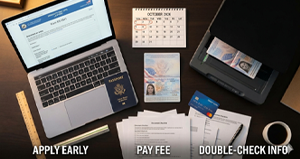
- Obtain a passport early: If you do not already have a valid passport, you will need one before the DV-2027 registration period opens. Apply for your passport well in advance of the start date. The Department has delayed the DV entry opening to allow time for applicants to get passports, but you should not wait until the last minute.
- Prepare a digital scan: You will need a clear JPEG image of your passport’s biographic page (the page with your photo and passport number) and signature page. Follow the government’s specifications for format and size (for example, no PDF files are accepted, and there is a maximum file size). Test your scan in advance to ensure it meets the technical requirements.
- Budget the $1 fee: Be ready to pay the $1 entry fee at the moment you submit your online entry. Although small, this fee is mandatory. Have a method (debit/credit card, or Pay.gov account) in place to pay it.
- Double-check information: Because the new process is stricter, any mistake or missing data can lead to automatic disqualification. Make sure you enter your passport details exactly as shown on the document (including name spelling, passport number, and expiration date). If you qualify for an exemption (for example, if you are stateless), gather any required supporting documents to claim it.
- Plan more time: Completing the entry will take longer than before. The Department estimates it could take up to an hour or more to gather documents, take scans, and fill out the form correctly. Set aside sufficient time (perhaps 60–90 minutes) to avoid rushing.
In sum, applicants should be proactive. Do not assume the old (passport-free) method still applies. The new rules are unforgiving: failing to submit a valid passport scan or the fee will mean a rejected entry before the lottery drawing. Carefully read the official DOS instructions for DV-2027 when they are released, and follow every requirement.
Conclusion
The recent rule changes make the DV lottery significantly more secure – but also more complicated.
By requiring passport verification and an entry fee, the State Department aims to weed out fake or duplicate applications and ensure the program serves genuine applicants.
These amendments go into effect for DV-2027, giving prospective entrants time to adjust. If you plan to apply, check your passport status now, prepare your digital documents, and stay tuned for the official registration date.
The upcoming lottery cycle will demand greater preparation, but it will still offer the same opportunity for a diverse group of immigrants to obtain U.S. green cards.
The Law Offices of Anne Z. Sedki
The immigration attorneys at The Law Offices of Anne Z. Sedki are here to help with all of your DV lottery and visa concerns.
Our firm handles a full range of immigration matters – from visas and green cards to compliance with changing DHS and State Department rules.
If you have questions about the updated DV process, need assistance gathering documents (like passports) or navigating the entry system, we can guide you every step of the way.
Consulting an experienced immigration attorney early can make a big difference. We can advise you on any deadlines, help ensure your entry form is complete and compliant, and explore alternative options if needed.
Contact us for a consultation so that we can explain your rights and options under the new rules and help you plan effectively.
For example, if you’re selected in the DV lottery, we also handle the visa application process and can advise on related issues like family petitions or consular interviews.