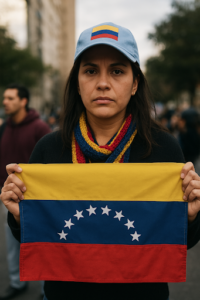
Earlier this year, the Trump administration ended the 2023 Temporary Protected Status (TPS) designation that had allowed more than 350,000 Venezuelans to remain in the U.S. Now, the axe has fallen again, this time on the 2021 TPS designation, which covered nearly 300,000 additional Venezuelans.
For many families, this second blow feels even heavier. With both programs now terminated, hundreds of thousands of Venezuelan nationals who built their lives under the protection of TPS are facing the possibility of losing their legal status, work authorization, and protection from deportation in just a matter of months.
How many TPS designations has Venezuela had?
Venezuela has actually had two separate TPS designations running concurrently. The first was issued in March 2021 by the Biden administration (Secretary Mayorkas) because of “extraordinary and temporary” conditions in Venezuela.
That 2021 designation was initially for 18 months (expiring Sept. 2022) and was extended twice – once in 2022 and again in October 2023 – so it would have continued through late 2025.
The second is a “redesignation” issued on Oct. 3, 2023 (again by DHS) in response to worsening conditions; this 2023 designation was originally set to expire April 2, 2025, and even was extended to October 2, 2026 by Mayorkas (consolidating both programs to the same end date).
In other words, there were two parallel TPS programs for Venezuela: the 2021 designation and the 2023 redesignation. (As of late 2024, about 256,600 people had TPS under the 2021 program and 248,800 under the 2023 program – roughly half and half.)
The 2023 designation was terminated earlier this year (effective April 7, 2025), and now the Department of Homeland Security has announced the end of the 2021 designation as well.
Reason for termination
Secretary Kristi Noem’s announcement says the conditions in Venezuela have improved sufficiently that TPS is no longer justified. The official notice explains that, after consulting with State and reviewing country conditions, the Secretary determined Venezuela “no longer meets the statutory requirements” for TPS.
In practical terms, DHS points to signs of economic recovery (for example, oil production up and inflation sharply down) and increased voluntary returns of Venezuelans. The Federal Register states that these improvements mean allowing Venezuelan TPS holders to remain is now “contrary to the national interest”.
Essentially, DHS asserts that the crisis in Venezuela, while still serious, is no longer deemed “extraordinary and temporary” enough to warrant TPS, and that continuing TPS would create a “pull factor” that undermines U.S. border security interests.
When will enforcement begin?
The termination takes effect 60 days after the notice’s publication, i.e. 11:59 p.m. on November 7, 2025. After that time, Venezuelan nationals who were relying solely on TPS will have lost their lawful status. DHS has told beneficiaries to make plans to depart by that date if they have no other immigration status.
Importantly, the announcement specifies a 60-day “grace” or transition period leading up to Nov. 7, during which existing employment authorizations (EADs) remain valid and holders remain lawfully present.
However, once Nov. 7 passes, DHS will again be free to place those without other status into removal proceedings. In practice, the administration is urging voluntary departure. U.S. Customs and Border Protection (CBP) has an “Easy Exit” (CBP Home) program: Venezuelans can register their departure in the CBP mobile app and receive assistance such as a free plane ticket home and a one-time $1,000 “exit bonus” per person. No specific later “enforcement date” was announced, but effectively removal proceedings can resume anytime after Nov. 7 for those who overstay or remain without status.
Other U.S. immigration options for affected Venezuelans
Aside from TPS, Venezuelans have no special new protections available. They must pursue the same immigration routes as other noncitizens. In practice, that means qualifying for a visa or green card through family, employment, or humanitarian programs if possible.
For example, someone married to a U.S. citizen can seek a family-based green card. Employers may sponsor eligible workers on H‑1B or similar visas, or through permanent (EB‑1/EB‑2/EB‑3) programs.
Visas like the H-2A (for farm labor) or H-2B (seasonal non-agricultural work) may be options for some. Those with advanced skills might qualify for an EB‑2 national-interest waiver or an EB‑1 extraordinary-ability category. U visas are available for victims of certain crimes committed in the U.S.
In theory, Venezuelans facing persecution could seek asylum, but asylum claims are rarely granted and come with strict filing deadlines (one year after arrival, generally).
Critically, DHS has not created any new pathway to replace TPS for Venezuelans. The special CHNV parole program (for nationals of Cuba, Haiti, Nicaragua and Venezuela) was ended on Day One of the current administration. And Deferred Enforced Departure (DED) for Venezuela had already expired in 2023.
In summary, unless a Venezuelan can fit into a family or employment category (or qualify for humanitarian relief like asylum or a U visa), there is no alternative temporary status. TPS holders should therefore consult an immigration attorney immediately to see if they can adjust status through marriage, employer sponsorship, or other means before their TPS ends.
Will the termination be challenged in court?
Almost certainly. Advocates have already filed lawsuits over the recent TPS rollbacks. In National TPS Alliance v. Noem, a California federal court reviewed DHS’s revocation of Venezuela’s TPS. That court found plaintiffs were likely to win on the merits (concluding that DHS had no lawful authority to nullify the previous administration’s extensions) and issued a nationwide injunction blocking the 2023 termination notices.
The government appealed, and in late August 2025 the Ninth Circuit upheld that injunction. Meanwhile, DHS took an emergency appeal to the U.S. Supreme Court. On May 19, 2025, the Supreme Court granted a stay of the injunction (8‑1), allowing Noem’s termination of the 2023 designation to go into effect while litigation continues. (A district court in New York also preliminarily blocked DHS’s attempt to cut off TPS, but that order was similarly stayed by higher courts.)
In sum, litigation is very much ongoing. Plaintiffs argue DHS illegally rescinded the Biden-era extensions (and even allege racial bias), but DHS counters that INA §244 explicitly bars judicial review of TPS decisions. It’s likely that more lawsuits will be filed challenging the Nov. 2025 termination of the 2021 TPS, and that any injunction attempts will be fiercely contested on appeal.
Other TPS terminations since Jan. 20, 2025
The decision on Venezuela fits a broader pattern. In the past year DHS has moved to end several long-standing TPS programs. On May 12, 2025, Secretary Noem announced the termination of Afghanistan’s TPS (designated in 2021) effective July 14, 2025.
Federal Register notices in June and July 2025 formally ended TPS for Nepal (effective Aug. 5, 2025) and Haiti (initially Sept. 2, 2025, though a judge has since blocked the termination until Feb. 2026).
Most recently, DHS announced TPS for Honduras and Nicaragua (both designated since 1999) will end Sept. 8, 2025. In each case DHS said conditions have improved and the programs can be wound down. (For contrast, Yemen’s TPS was just extended through March 2026, and Eritrea/Somalia/Syria/Sudan programs remain in effect.)
In short, the administration has systematically ended all of the old TPS designations from the prior decade, and Venezuela is the latest casualty.
The Law Offices of Anne Z. Sedki
If you or a loved one is affected by these changes, legal advice is essential now. The termination of Venezuela’s TPS does not eliminate all options, but the window is closing fast.
At The Law Offices of Anne Z. Sedki, we have helped many TPS beneficiaries explore alternate paths. Our attorneys can review your case to see if you qualify for family- or employer-based visas (e.g. green cards through a spouse or job), or other relief like asylum or humanitarian parole.
We also stay on top of TPS litigation and policy changes, so we can advise whether any legal challenges might pause the termination. Don’t wait until the deadline, contact our office to schedule a consultation. We can help you understand your options and take action now, so that you’re not caught by surprise when TPS ends.