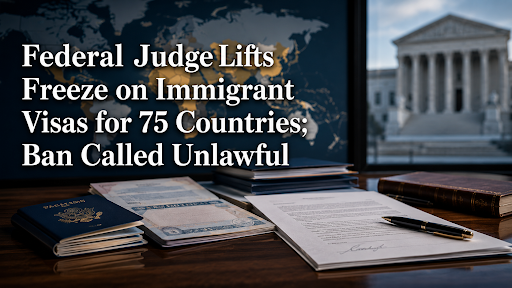
A federal judge in New York has struck down the Trump administration’s blanket suspension of immigrant visas for nationals of 75 countries.
On August 21, 2026, Judge Jeannette Vargas ruled the policy “contrary to law and in excess of statutory authority,” vacating the ban and ordering case-by-case evaluation of affected visa applications. This means the freeze on green cards and family-based visa approvals from those countries is no longer in effect, and prior denials made solely under the ban must be set aside.
Here’s what applicants need to know about the original policy, the court’s ruling, and what happens next.
What was the 75-country immigrant visa freeze?
In January 2026, the State Department announced that effective January 21, 2026 it would pause all immigrant visa issuances for applicants who are nationals of 75 designated countries. The list included nations from Africa, Asia, Latin America, the Middle East, and Eastern Europe – for example Afghanistan, Nigeria, Brazil, Pakistan, Somalia, and Ukraine (among many others).
According to the State Department notice, these countries were considered “at high risk” of their nationals using public benefits, so the administration said it was conducting a full review of visa policies to prevent prospective immigrants from becoming public charges.
In practice, the policy meant consular officers were instructed to refuse all immigrant visas to citizens of those countries, regardless of an individual applicant’s situation. On paper, the government’s “public charge” rationale was that recipients of benefits could be a financial burden. However, the freeze did not require any showing that a particular applicant needed assistance – it was a blanket ban on 75 countries.
Why did the federal judge rule the freeze unlawful?
The State Department’s 75-country ban was challenged in CLINIC v. Rubio by advocacy groups and affected families. U.S. District Judge Jeannette Vargas held that Secretary of State Marco Rubio lacked the authority to impose this blanket rule, and that it violated the Immigration and Nationality Act (INA).
The court noted that the policy “categorically prohibits the issuance of immigrant visas based upon the nationality of the applicant,” which is expressly forbidden by federal law. In other words, Congress has barred discrimination in visa issuance based on country of origin, and the judge found the ban ran “afoul” of that provision.
Judge Vargas also emphasized that under the INA, consular officers – not the Secretary of State – have the authority to make visa decisions on a case-by-case basis. By ordering refusals for an entire class of applicants, the Secretary had “exceeded his authority” and undermined the statutory process.
The judge therefore ruled the suspension was “patently unlawful,” vacating the policy itself as ultra vires (beyond the Secretary’s power). In practical terms, the ruling recognizes that each visa application should be considered on its own facts – a foreign national cannot be refused a green card solely because of their nationality.
As Judge Vargas explained, “The Policy…categorically prohibits the issuance of immigrant visas based upon the nationality of the applicant [and] represents a direct abrogation of this statutory scheme.” The court held that both 8 U.S.C. §1152(a)(1)(A) (banning nationality discrimination) and 22 C.F.R. §40.6 were violated, and even noted the policy “exceeded the Secretary of State’s authority under 8 U.S.C. §1104(a)”.
What does the decision mean for applicants from the 75 countries?
The judge’s order vacates the visa freeze and requires the State Department to resume normal visa processing. Immigrant visa cases from the affected countries must now be handled individually – consular officers again have discretion to approve applicants who meet all eligibility criteria.
In fact, the court explicitly set aside any visa denial that was based only on the 75-country ban. In other words, if an immigrant visa application was denied solely because the applicant was from a banned country, that denial is no longer valid.
With the ban struck down, the State Department is expected to restore routine scheduling and adjudication of immigrant visa interviews.
Practically, applicants should now be able to proceed toward obtaining their visas as before: they can file or maintain their visa applications, attend consular interviews, and ultimately receive a decision on the merits.
That said, the court’s order did not automatically grant everyone a visa. Each application will still be evaluated under the existing legal standards. But the blanket refusal policy is gone, so visa officers must consider factors like the applicant’s qualifications, documents, and public-charge considerations in each case. The ruling simply ensures this is done on an individualized basis, not by country.
What happens to visa applications that were previously denied or put on hold?
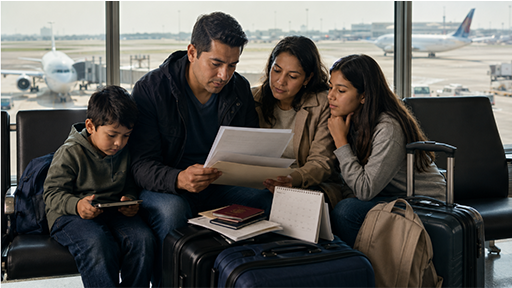
This has been the greatest concern for families caught by the freeze. In its judgment, the court vacated any consular refusal that was made solely because of the visa ban.
That means past denials under this rule are effectively nullified. Those applicants can now have their cases reconsidered. The court ordered those cases remanded for further proceedings – in practice, consulates should re-evaluate the applications, rather than forcing applicants to start completely over.
Applicants who were left in limbo can inquire about the status of their cases. For example, if your immigrant visa interview was held or your case was otherwise stalled, you may contact the National Visa Center or the U.S. embassy/consulate handling your case to confirm that processing will resume.
Petitions and priority dates generally remain valid; you should not need to file a brand-new application simply because of the temporary freeze. However, you may need to update documents or re-schedule interviews depending on how each consulate is handling cases. It’s wise to communicate with your visa attorney or the consular office to clarify next steps.
In short, previous refusals based only on the ban do not stand anymore. Those applicants should now be treated like any other visa applicant from their country. If a visa had been refused only because of the suspension, consulates will be instructed to reopen the case. That said, denials for other reasons (ineligibility under other grounds of the law) are not erased – only those issued “based solely upon the Policy” are vacated.
Does the ruling end all Trump’s immigration restrictions?
No. This decision specifically addresses only the 75-country immigrant visa suspension. It does not automatically overturn other travel or visa restrictions. For example, any separate travel bans or restrictions (such as the so-called “travel bans”, visa bond requirements, or other executive actions) remain in force unless and until challenged and struck down on their own merits.
Similarly, this ruling does not affect nonimmigrant visas (tourist, student, work permits), or other federal immigration rules currently in effect. Applicants should not assume that every Trump-era policy is gone; they should verify each rule individually.
In summary, this court order removes one particular barrier – the 75-country freeze – but doesn’t wipe the slate clean for all immigration rules. It’s important to stay informed about the status of other policies affecting your case.
What happens next? Can the administration appeal?
The ruling vacating the visa ban is now in effect, but it could be subject to further legal challenge. The government could appeal Judge Vargas’s decision to the U.S. Court of Appeals (the Second Circuit), and if it does, it might seek a stay of the order while the appeal is pending.
If a stay were granted, the visa suspension could potentially be re-imposed temporarily. However, unless and until a higher court issues a stay, consulates should follow the district court’s order and resume individual processing.
It’s also possible that another court (or Congress) could address similar policies. For now, though, the freeze is lifted by this decision. Applicants should proceed with the assumption that their cases can move forward, while remaining aware that the legal situation could evolve on appeal.
Either way, affected visa applicants should continue gathering documentation, attending interviews when scheduled, and complying with visa requirements as usual. Any changes from higher courts would be implemented later, but building a strong case now can only help in the long run.
The Law Offices of Anne Z. Sedki
If you or a loved one have been affected by the 75-country visa suspension or other immigration rules, don’t go it alone. The Law Offices of Anne Z. Sedki, with offices in New York and New Jersey and a national client base, can help you understand your options and navigate the aftermath of this ruling.
Our team has deep experience with consular processing and visa appeals. We can review your case, help you prepare updated applications or waivers if needed, and advise on the best strategy whether the government’s changes continue or are blocked. Immigration policy is in flux, but you don’t have to face uncertainty by yourself.
Contact our office today to schedule a consultation. The right guidance can make a huge difference in moving your case forward.
Frequently asked questions
- Is the 75-country U.S. immigrant visa ban still in effect?
No. A federal court vacated the ban in August 2026, meaning it is no longer legally valid. Consular officers must return to case-by-case review for applicants from those countries. - Can citizens of Nigeria (or any of the 75 countries) now apply for a U.S. immigrant visa?
Yes. With the freeze lifted, nationals of those countries can submit visa applications and attend interviews again. Any applications that were pending or denied solely due to the ban should be reconsidered. - What happens to immigrant visa applications that were frozen by the ban?
The court’s order vacated the freeze and sets aside previous denials made only under the ban. Those cases should be remanded for continued processing. Applicants may need to contact the National Visa Center or consulate for the next steps. - Do I need to reapply after the 75-country visa freeze is lifted?
Generally, no. You should not have to start over if you already filed an immigrant petition or visa application. Instead, consular officers will review the existing case on its merits now that the ban is gone. However, follow consulate instructions – you might need to update documents or attend a new interview. - Does this ruling affect tourist or student visas (nonimmigrant visas)?
No. The 75-country suspension applied only to immigrant visas. Tourist, student, and other nonimmigrant visa categories were not part of this policy and continue under the usual rules. - Can the Trump administration appeal this decision?
Yes. The government could appeal to the Second Circuit Court of Appeals. It might also seek to keep the ban in place by asking for a stay of the ruling. For now, the order stands, but stay tuned in case of any higher court action. - Which 75 countries were affected by the immigrant visa freeze?
The list included 75 nations across Africa, Asia, Latin America, the Middle East, and Eastern Europe. Notable examples were Afghanistan, Iran, Russia, Somalia, Nigeria, Pakistan, Brazil, and Cuba, among others.
Each person’s situation is unique, so if you have concerns or questions about how this ruling affects you, it’s wise to consult an immigration attorney. The Law Offices of Anne Z. Sedki are ready to help you understand the implications and navigate the next steps.