Table of Contents
USCIS Rescinds 2022 Public Charge Rule and Restores a Stricter Policy
What is the new public charge rule from USCIS?
Key differences: 2022 rule vs. new rule
When does the new rule take effect?
Who is affected by the new public charge regulation?
Public charge factors USCIS will consider under the new rule
How the stricter public charge policy impacts green card applications
What applicants should do now to prepare
The Law Offices of Anne Z. Sedki
The U.S. Citizenship and Immigration Services (USCIS) announced a major change to the “public charge” rule. Under this new policy, immigration officers regain broader authority to consider an applicant’s use of government benefits when deciding green card and visa cases.
This could affect many would-be permanent residents, so it’s important to understand how the new public charge rule works. We’ll explain what the updated policy says, how it differs from the 2022 Biden-era rule, who it applies to, and what steps applicants should take to prepare.
What is the new public charge rule from USCIS?
The Department of Homeland Security (USCIS) has issued a final rule rescinding the 2022 public charge regulation. The 2022 rule – implemented under the Biden administration – had narrowly defined “public charge” to include mostly cash welfare and long-term institutional care.
Under that rule, programs like SNAP (food stamps), Medicaid, and housing assistance generally could not be considered against an applicant. In contrast, the new policy restores the broader standard used during Trump’s first administration. DHS will again look at an immigrant’s entire situation on a case-by-case basis.
In practical terms, USCIS officers will review all relevant facts of a case, not just the limited benefits covered in 2022. As CBS News explains, the final rule “restores the broader discretion USCIS had during the first Trump administration,” allowing officers to consider factors such as an applicant’s age, health, family status, assets, financial resources, education, skills and whether they have received means-tested government benefits.
In other words, officers will make “individualized, fact-specific public charge inadmissibility determinations, based on the totality of the alien’s circumstances”.
Put simply, the new rule represents a return to the old, broader approach. USCIS now has authority to ask about and weigh many kinds of benefits and conditions when deciding if someone might become a public charge.
Key differences: 2022 rule vs. new rule
Here are the main differences between the old (2022) policy and the new one:
- Scope of benefits considered: Under the 2022 rule, officers were only supposed to count “public cash assistance for income maintenance” (like TANF or SSI) and long-term institutional care. Non-cash programs (Medicaid, SNAP, housing vouchers, etc.) were off-limits. The new rule removes those restrictions. Now, as the final rule makes clear, officers can consider “means-tested taxpayer-funded benefits” of any kind. In practice, this means food stamps, Medicaid, housing subsidies and similar programs can again factor into the analysis if received by an applicant.
- Factors and standards: The 2022 rule strictly limited officers to a set list of factors (five statutory factors plus two additional ones) and did not allow any other evidence. By contrast, the new rule emphasizes a “totality of circumstances” approach. Officers will consider the statutory factors set by law (age, health, family status, financial resources, education/skills, and required affidavits of support) and any other relevant information about the applicant. For example, USCIS says officers will weigh things like current income or employment, assets (savings or property), debts, and the support of any sponsors, in addition to benefits received. The new rule does not list specific positive or negative factors; instead, it tells officers to use their “good judgment and discretion” in evaluating each case. This is a broad contrast to 2022, which rigidly “straitjacketed” the public charge test to only certain categories of benefits.
- Definition of “public charge”: The 2022 rule effectively mirrored the old 1999 guidance: someone who relies primarily on government cash assistance or long-term institutional care. The new rule restores the policy that any alien who is likely “at any time” to become dependent on public resources can be found inadmissible. In practical terms, this expands the definition beyond just cash assistance. It means that frequent use of SNAP, Medicaid, housing aid or similar programs could be seen as a sign of dependence. As CBS News notes, officers will even look at whether the person has received any “means-tested” benefits and use that to judge their ability to support themselves.
- Impact on forms and filings: USCIS has announced that the new policy will take effect on September 18, 2026. Importantly, USCIS will revise the Green Card application (Form I-485) to reflect the new rule. Any adjustment applications filed on the old form on or after that date will be rejected. In practice, there will be a short gap between publication and enforcement: USCIS says it won’t start applying the new framework for 60 days after it’s finalized, to give time to update forms and guidance.
In summary, the new public charge rule is much broader than the 2022 version. It lets USCIS consider more kinds of benefits and more aspects of each applicant’s situation.
When does the new rule take effect?
USCIS formally published the final rule on July 20, 2026. According to the agency, the policy will take effect on September 18, 2026.
Practically speaking, USCIS will not immediately apply the new public charge framework on July 20. Instead, the rule specifies a 60-day delay so that USCIS can update its forms and procedures (this pushes the “operational” date into September).
What does this mean for applications? Essentially:
- Any green card applications postmarked or submitted on or after September 18, 2026 will be reviewed under the new rule. USCIS will require a new Form I-485. If you file on or after the effective date with the old form, USCIS will reject it.
- For applications already filed before the new rule goes into effect, USCIS has said it will only count benefits received after the rule is operational (except for certain cash benefits). In other words, any SNAP, Medicaid, or housing aid the applicant used before the rule’s effective date generally will not count against them. (Cash welfare and long-term care benefits used before the effective date can still be reviewed, since those were always part of the test.)
In short, expect the new public charge framework to govern all filings dated mid-September 2026 and beyond. Applicants who file earlier in 2026 should be aware of these transition rules and ensure they use the correct forms.
Who is affected by the new public charge regulation?
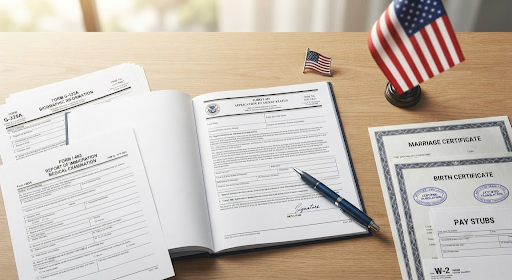
The public charge ground of inadmissibility applies to most people applying for immigrant visas or green cards. That means:
- Immigrant visas: Applicants abroad seeking permanent residency at a U.S. consulate will face the public charge test at their interview with a consular officer.
- Adjustment of status applicants: People already in the U.S. applying to adjust status to permanent resident (Form I-485) will be screened by USCIS officers under this rule.
The rule does not apply to U.S. citizens, green card renewals, or naturalization (citizenship) applications. It also does not apply to most nonimmigrant visas (like tourist, student, or H-1B work visas) when they are first issued, although DHS has proposed a separate rule for nonimmigrant extension/changes of status. In practice, any permanent-residence applicant must consider this test.
Some categories of immigrants are exempt from the public charge ground by law. Refugees and asylees, for example, are not subject to public charge. The same goes for certain humanitarian categories: Special Immigrant Juveniles (trafficked children), victims of human trafficking (T visas), victims of certain crimes (U visas), and self-petitioners under the Violence Against Women Act (VAWA) are exempt. (These exemptions will continue unchanged.)
In short: if you are applying for a green card or immigrant visa and you are not in one of the exempt groups above, the public charge test will apply to your case under the new rule. This is the case whether you’re applying in New York, New Jersey, or anywhere else in the world.
Public charge factors USCIS will consider under the new rule
USCIS will evaluate each applicant’s case holistically. In general, immigration law requires officers to look at certain minimum factors (age, health, family status, financial resources/assets, and education/skills). Under the 2022 rule those were the only factors listed. With the new rule’s broad discretion, officers will still consider those statutory factors, and more.
According to USCIS guidance, officers will examine all relevant evidence in the “totality of the circumstances.” Key considerations include:
- Age and health. Younger and working-age applicants are generally favored, while very old or incapacitated applicants may raise concerns (unless they have strong support or assets). Chronic health problems may negatively impact self-sufficiency.
- Family status. Single applicants with no dependents generally have a lower risk. Supporting a large family or having dependents can be seen as a higher risk if it strains finances.
- Financial situation. Income from work or assets like savings, property or investments are positive. Lack of steady income or high debt can be negative. USCIS will examine pay stubs, tax returns, bank statements, etc.
- Education and skills. Applicants with college degrees or professional skills (and especially a job offer in the U.S.) are viewed as more self-sufficient. Lower education or language barriers could hurt an applicant’s ability to support themselves.
- Receipt of public benefits. Critically, officers will now look at any means-tested public benefit use by the applicant. This includes SNAP (food stamps), Medicaid or other government-paid health care, public housing or rental assistance, and similar programs. Under the new rule, use of these benefits can be counted as evidence of reliance on government support. (USCIS has clarified that benefits received solely by family members are not automatically the applicant’s benefits – but they may still be considered insofar as they affect the household’s finances.)
- Affidavit of support and sponsorship. If you are a family- or employment-based applicant, your sponsor must typically submit Form I-864 (Affidavit of Support). A legally enforceable affidavit from a financially strong sponsor is a “heavily weighted positive factor” that can offset other negative factors. Conversely, a missing or insufficient sponsor could be a negative.
USCIS instructs officers to weigh positive and negative factors together. No single factor automatically results in denial. An applicant “must at least demonstrate the ability to support [themselves]” and not become primarily dependent on aid.
The new rule simply gives officers wider range to consider things. As the rule notes, under this broader review “officers will more accurately assess an alien’s likelihood at any time of becoming a public charge”.
How the stricter public charge policy impacts green card applications
In practice, this tougher public charge test means that some applicants who previously would have had no problem may now face extra scrutiny. Any green card seeker who has recently used means-tested public benefits may be more closely examined.
Immigration attorneys anticipate more Requests for Evidence (RFEs) on the topic of financial responsibility. Applicants may be asked to provide updated job letters, tax returns, bank statements and sponsor affidavits to prove they are self-sufficient.
It’s important to put this in context, though. During the period of 2020–2024, formal public-charge denials were extremely rare. DHS reported only 41 to 95 denial decisions per year on adjustment applications. Even under the Trump-era public charge rule (2019–2020), very few cases were ultimately denied; most applications with benefit use were eventually approved once applicants posted a bond or provided more documentation.
That said, the new policy could deter some immigrants from using benefits, even those they qualify for. Experts worry that qualified families may fear accessing food, health, or housing assistance, concerned it might jeopardize their case. The Biden administration’s 2022 rule explicitly sought to avoid such “chilling effects,” but the Trump administration argues the stricter rule is needed to protect taxpayer resources. Time will tell how USCIS implements these changes in the field.
For now, applicants should be prepared for a more thorough financial review. If you are using any public benefits, recognize that those benefits could factor into your green card case. However, recall that the law still requires a case-by-case decision. Citizenship attorneys often point out that if you can demonstrate steady work, income, and family or sponsor support, the outcome can still be favorable. The new rule does not ban immigrants from getting a green card – it just raises the bar for demonstrating self-sufficiency.
What applicants should do now to prepare

If you are planning to apply for a green card or immigrant visa in the coming months, here are some steps to consider:
- Gather evidence of self-sufficiency. Collect pay stubs, tax returns, bank statements, and any documentation of savings or property. An updated letter from your employer describing your income and position can help. If you have assets (like a car, home equity or investments), make a list. These show that you have the means to support yourself.
- Secure a strong sponsor if required. If your category requires an Affidavit of Support (Form I-864), make sure your sponsor meets the income requirements. A sponsor with a high income or substantial assets can help outweigh concerns about your finances. Verify that the affidavit is complete and properly signed, and gather supporting documents (IRS transcripts, W-2s, etc.) for your sponsor.
- Review your benefit use. Be aware of any current benefits you’re receiving. While the new rule allows these to be considered, the law also considers when the benefits were used. If you applied for a green card before Sept 18, 2026, USCIS will only look at benefits received after that date (except for cash welfare). If possible, delay or limit new means-tested benefit enrollment until after your green card case is decided.
- Stay informed and use the right forms.Watch for USCIS updates. By September 2026, the agency will release a new I-485 form that reflects the rule change. Do not file with an old form after the rule’s effective date or USCIS will reject your application. Also check for any new policy guidance or instructions from USCIS or the Department of State about public charge.
- Consult an immigration attorney. Given the complexity and the high stakes, it’s wise to seek legal advice. An experienced attorney (for example, in our Garden City, NY or New Jersey office) can review your case specifics, help prepare strong evidence, and flag any issues before you file. Every applicant’s situation is different, and professional guidance can make a big difference in how you address the public charge test.
Remember: changes in the rule do not mean you are automatically in trouble. Many applicants who use certain benefits can still qualify for green cards, especially if they have other strong factors. The key is to proactively address any concerns and present a complete picture of your situation.
Final thoughts
The new public charge rule marks a significant shift in U.S. immigration policy. It underscores a philosophy that immigrants should prove they will be self-supporting. For many immigrants and families, this may feel daunting. But it is important to stay calm and prepared. USCIS still evaluates each case individually. Having a well-documented, realistic application goes a long way.
If you or your family are applying for a green card, don’t panic over this rule change. Instead, use it as an opportunity to double-check your application package, gather strong supporting evidence, and clarify any areas of concern in advance. And remember that hardships like unemployment or illness are understood — the test is about likelihood and support, not penalizing people for past events beyond their control.
We also want to emphasize that this blog is for informational purposes and does not replace legal advice. Immigration law is always evolving, and each person’s situation is unique. If you have questions about how the new public charge policy affects your case, or if you’re preparing a green card application, it’s best to talk to a qualified immigration attorney.
The Law Offices of Anne Z. Sedki
At The Law Offices of Anne Z. Sedki, our team of experienced immigration lawyers is here to help you navigate these changes. Based in New York and New Jersey (we serve clients nationwide and worldwide), we have helped thousands of families and individuals through complex immigration processes. We understand how stressful this new public charge policy can be, and we can guide you on how to document your case effectively.
If you’re concerned about the public charge rule or any other immigration issue, reach out for a personalized consultation. Whether it’s answering your questions, reviewing your financial documents, or representing you in an adjustment or visa interview, we can provide the support you need. The path to a green card may have gotten a little more complicated, but you don’t have to walk it alone. Contact The Law Offices of Anne Z. Sedki today, and let us help you build the strongest possible application under the new rules.