The Department of Homeland Security (DHS) has announced that Temporary Protected Status (TPS) for South Sudan will end effective January 5, 2026. In its official notice, DHS explains that after a statutorily required review, the Secretary determined South Sudan “no longer continues to meet the conditions for the designation for Temporary Protected Status”.
In practical terms, that means after January 5, 2026, South Sudanese TPS beneficiaries will lose their protected status. Below we break down what happened, why it happened, and what South Sudan nationals in the US should do next.
History of TPS for South Sudan
South Sudan has been a TPS-designated country since it became an independent nation in 2011. In October 2011, DHS first designated South Sudan for TPS on October 13, 2011, citing the ongoing armed conflict and humanitarian conditions there. Since that initial 18-month designation, TPS for South Sudan was renewed or “extended and newly designated” multiple times.
For example, DHS explicitly notes that after 2011 it extended/redesignated South Sudan for TPS in 2013, 2014, 2016, 2017, 2019, 2020, 2022, and again in September 2023. Each extension was based on continued armed conflict or “extraordinary and temporary conditions” in South Sudan. The most recent extension occurred in May 2025, which extended TPS through November 3, 2025.
In sum, for nearly 14 years South Sudanese nationals with TPS have been allowed to stay and work in the US. But DHS has now concluded those conditions have changed, triggering the termination set to take effect January 5, 2026.
Reason for Termination
According to DHS’s termination notice, the Secretary reviewed the current country conditions and concluded that South Sudan no longer qualifies for TPS. In particular, officials found that the situation “no longer meets the criteria for an ongoing armed conflict that poses a serious threat to the personal safety of returning South Sudanese nationals”. While isolated violence and communal clashes still occur, DHS observes that “return to full-scale civil war, to-date, has been avoided”.
Diplomatic agreements and improvements in security and infrastructure also suggest that South Sudan may now be able to protect returning citizens. In plain terms, DHS is saying that, despite remaining challenges, South Sudan’s conditions have improved enough that it does not fit the statutory definition for TPS anymore.
Additionally, the Department notes that on balance continuing TPS for South Sudan would be “contrary to the national interest” of the United States. In other words, DHS determined that foreign-policy, national security, and public-safety considerations weigh against keeping South Sudan’s TPS designation open. (For example, the notice cites cooperation from South Sudan’s transitional government on removals, and notes concerns about fraud and security cases among the TPS population.)
Congress even built a “no review” rule into the law: the Immigration and Nationality Act explicitly states there is “no judicial review of any determination of the [Secretary] with respect to the designation, or termination or extension of a designation”. In short, DHS says it lawfully followed the TPS rules: the conflict risks have abated, and the Secretary must therefore end the designation.
When Will Enforcement Begin?
DHS has set a clear countdown. The Federal Register notice states that the termination is effective at 11:59 p.m. on January 5, 2026. In practical terms, this means that after midnight on January 6, 2026, South Sudan TPS no longer protects anyone. Any South Sudanese national who was in the US solely because of TPS will immediately be without status at that point. The notice itself spells this out: “After January 5, 2026, nationals of South Sudan … who have been granted Temporary Protected Status … will no longer have Temporary Protected Status”.
Put simply, the safe harbor ends on January 5. Once that date passes, U.S. immigration authorities are back on the clock. Legally, any South Sudanese still in the country with only TPS (and no other status) could be placed in removal proceedings. Work permits (EAD cards) issued under the South Sudan TPS will automatically expire on that date. From January 6 onward, DHS and ICE could begin enforcing the immigration laws against these individuals like any other undocumented noncitizen.
How South Sudan Nationals Should Self-Deport
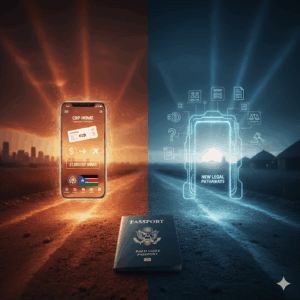
DHS strongly encourages South Sudanese nationals to voluntarily depart the U.S. rather than be formally removed. Specifically, TPS beneficiaries planning to leave are urged to use the CBP “HOME” mobile app (part of President Trump’s “Project Homecoming” initiative). CBP says this app provides a “secure self-departure process” with generous incentives.
Under the program, eligible immigrants who register and then leave on their own are promised a free flight home and a $1,000 “exit bonus.” As one DHS description puts it, the Home app includes “a complimentary flight” and “a $1,000 exit bonus” for departing noncitizens.
In effect, the government will pay for your plane ticket (or reimburse up to a limit) and send you $1,000 once you verify your departure. DHS even touts “potential future opportunities for legal immigration” for those who use the app, although anyone who leaves voluntarily should assume it will be hard to return to the U.S. for many years.
To use the Home app, a person must first register and be approved, then upon departure open the app and select “Verify Departure.” Once CBP confirms you have left (via an I-94 exit or other proof), you receive the bonus payment. Note that only certain immigrants qualify: for example, TPS holders generally do qualify.
The key is that this is self-deportation on your own timeline, rather than risking enforcement. Importantly, you are not required to use the app – you can still exit the U.S. without it – but using it ensures the government records your departure and grants the benefits. In short, it’s wise for South Sudan TPS holders who plan to leave to take advantage of CBP HOME, so you can get a free ticket and $1,000 and handle your departure in the smoothest way possible.
Other Immigration Options for Affected Nationals
TPS termination does not magically give someone another form of status – beneficiaries will need to find some alternative legal avenue or else prepare to depart. USCIS explicitly reminds people that they “might be eligible for other immigration options” and points to its “Explore My Options” tool. In practical terms, affected South Sudanese should consult an immigration attorney immediately to see if any of the following might apply:
- Family-based immigration: If you have close relatives who are U.S. citizens or lawful permanent residents (e.g. a spouse, parent, or child over 21), you may qualify for a family visa or green card. For example, marriage to a U.S. citizen could allow adjustment to permanent residence.
- Asylum or other humanitarian relief: If you fear persecution upon returning to South Sudan, you might apply for asylum. (Beware: after leaving the U.S., an asylum claim would generally be closed.) Other special programs (such as the U visa for crime victims, T visa for trafficking victims, or relief for abused spouses under the Violence Against Women Act) could apply in rare cases.
- Employment-based visas: If an American employer is willing to sponsor you, an H‑visa or other work visa might be available, depending on your skills and job.
- Cancelation of removal: If you fall out of status and are placed in removal proceedings, you may qualify for cancellation of removal (though this is very limited and requires many years in the U.S.).
- Temporary visas: In some situations, people have left the U.S. and re-entered on a tourist or student visa to maintain status – but this is very risky and depends on being eligible at a consulate.
Each case is unique. There is no automatic relief after TPS ends – you must independently qualify for some other status. That is why we strongly advise talking to an attorney before January 2026, to explore any possible path such as filing for adjustment, asylum, or a visa. If no status is available, preparing for a voluntary departure is crucial.
Will the Termination Be Challenged in Court?
It’s natural to ask whether anyone will sue over this decision. In general, court challenges to TPS terminations have happened in the past (for example, lawsuits like Ramos v. Nielsen sought to block earlier TPS cuts on constitutional grounds).
However, the law here is tough. The Immigration and Nationality Act explicitly states there is “no judicial review of any determination of the [Secretary] with respect to the designation, or termination … of a foreign state” for TPS. In other words, Congress said DHS’s TPS decisions cannot be directly appealed in court. As a practical matter, that means a judge normally cannot overturn a termination notice simply by finding the Secretary made a mistake.
That said, litigants have tried creative legal claims (for example, alleging racial discrimination or due process violations) when prior TPS countries were cut. As of now, we have seen no filed lawsuit specifically challenging the South Sudan notice.
Immigrant-rights groups have publicly criticized the decision — the U.S. Committee for Refugees and Immigrants (USCRI), for instance, has urged the Trump Administration to extend TPS for South Sudan and highlighted ongoing violence in the country — but a formal court case has not been announced. It’s possible advocacy organizations or individuals may attempt to sue, but they face the steep hurdle of §244(b)(5) of the INA (no-review clause). At this point, affected individuals should prepare for the termination to stand unless and until a court says otherwise.
What This Means for You
If you are a South Sudan national with TPS, this news has immediate personal impact. It means that on January 6, 2026, you will no longer have protected status in the U.S. Per the legal rules, once TPS ends you “return to the same immigration status or category that [you] maintained before TPS”.
For most TPS holders, that means you revert to having no lawful status. In practical terms, you will lose your work permit and be subject to deportation after the termination date. Continuing to stay in the U.S. without another legal basis would be unlawful.
Facing this, you have two broad choices: regularize your status through some other immigration benefit, or depart the United States. If you stay beyond January 5, 2026 without a valid visa, you risk ICE arrest, detention, and eventual removal. You would also accrue unlawful presence, which can trigger bars of re-entry (for example, a 3-year or 10-year ban upon leaving). Even if you use the CBP Home app to leave, note that you will generally face a multi-year ban before you can return lawfully.
Given these stakes, action is urgent. If you have any possible path to remain lawfully (such as a pending family petition or asylum claim), you should pursue it immediately with an attorney. If no path exists, you should plan to take the voluntary departure route.
This includes gathering necessary documents, updating passports or travel papers, and registering on the CBP Home app as soon as you can. When you do depart, make sure to use the Home app or some form of recorded exit so the government knows you left voluntarily. Then you can obtain the promised assistance (airfare and $1,000).
Keep in mind: if you have pending applications (for example, a pending asylum application or a pending adjustment), you should consult your lawyer about how those are affected. And if you have any criminal issues or removal orders, those complicate matters further. The bottom line is, the January 5, 2026 date is firm – after that, your TPS ends and everything changes.
Conclusion
The bottom line is that TPS for South Sudan will end on January 5, 2026, and affected nationals must prepare now. DHS’s official reasoning is that South Sudan “no longer meets the statutory conditions for TPS designation” and allowing TPS to continue would be “contrary to the national interest”.
If you hold South Sudan TPS, you should start planning immediately: talk to an immigration lawyer about any other visa or relief you might qualify for, and make arrangements to depart the country before the deadline. Remember, by using the CBP HOME app you can leave with a paid flight and $1,000 help rather than waiting for enforcement action. Whatever you do, don’t ignore this announcement. The lawful status you have today will vanish next year unless you take steps.
For personalized guidance through this transition, please contact The Law Offices of Anne Z. Sedki. Our firm is closely monitoring this situation and can advise on your best options.