The State Department announced that it is expanding its social media screening process to many more visa applicants.
Effective March 30, 2026, consular officers will begin conducting an “online presence review” of applicants in 14 additional nonimmigrant visa categories.
This builds on earlier 2025 policies (which already covered F-1/M-1 students, J-1 exchange visitors, H-1B specialty workers, and their dependents). According to the official announcement, these new checks aim to use publicly available online information to spot visa applicants who may pose security or safety risks. In the words of the State Department, “every visa adjudication is a national security decision,” and officers will “use all available information” – including social media – during vetting.
Background to the Expansion
Social media vetting for visa applicants was introduced by the State Department in 2025 as a national security measure. In June 2025, the Department began requiring F-1 and M-1 student and J-1 exchange visa applicants to provide social media handles for review.
In December 2025, it added H-1B workers and their H-4 dependents to this requirement. The March 2026 announcement is the latest step. The government says these reviews help ensure that visa-seekers do not harbor hostile intentions toward the U.S. or support terrorism.
Officials emphasize the need for vigilance: “the United States must be vigilant during the visa issuance process” to ensure applicants will not harm Americans or U.S. interests.
In practice, social media screening is intended to catch any red flags that might not appear in paperwork.
New Visa Categories Affected
The March 30, 2026 expansion brings the following additional nonimmigrant visas under mandatory social media review:
- K-1 and K-2 (fiancé(e) visas and minor children of fiancé(e) visas)
- K-3 (nonimmigrant visa for spouses of U.S. citizens)
- R-1 and R-2 (religious workers and their families)
- H-3 (trainees) and H-4 dependents of H-3 holders
- A-3 and G-5 (personal employees/attendants of foreign diplomats and international organization staff)
- C-3 (domestic workers of foreign government officials in transit)
- Q (cultural exchange program participants)
- S (witnesses or informants assisting law enforcement)
- T (victims of human trafficking)
- U (victims of certain crimes who assist law enforcement)
These categories are in addition to the visas already subject to social media checks: F-1/M-1 students, J-1 exchange visitors, H-1B workers, and H-4 dependents. In total, this expansion covers a wide array of family-based, employment-based, religious, and humanitarian visa types.
What Applicants Must Do
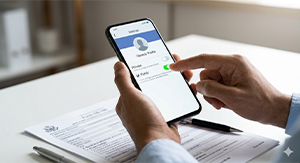
If you are applying for any of the above visas, you must prepare to have your social media reviewed.
The Department’s announcement instructs affected applicants to “adjust the privacy settings on all of their social media profiles to ‘public’ or ‘open’”.
In other words, before your visa interview you should set every social media account (Facebook, Instagram, X/Twitter, TikTok, LinkedIn, YouTube, etc.) to public viewing. You should also carefully review and clean up your past posts, photos, and comments so that nothing could be misinterpreted or raise questions.
Importantly, you should list all social media accounts and usernames on your Form DS-160 (the online visa application) – the State Department requires disclosure of every platform used in the last five years.
Failing to disclose or restricting accounts may delay or jeopardize your visa, since officers will check for inconsistencies.
How U.S. Embassies and Consulates Will Vet
Consular officers at U.S. embassies and consulates will now include these new categories in their social media screening. For each affected visa interview, officers will review the applicant’s publicly available online presence.
The State Department stresses that it conducts “thorough vetting of all visa applicants” and uses “all available information” in that vetting.
In practice, this means officers may browse your public posts, photos, connections, and activity on any major platform. If an account is private or deleted, officers may ask you to make it accessible or may view that as a negative factor.
Essentially, the consular officer will treat social media like any other part of your application, looking for any signs of inadmissibility or security concerns.
When Does the Expansion Take Effect?
This policy is effective March 30, 2026. Any visa applicant interviewed on or after that date in one of the listed categories will be subject to social media screening.
The official announcement (dated March 25, 2026) clearly states “Effective March 30, [2026], the Department of State will expand online presence review…”.
In practical terms, applicants with pending visa interviews should plan to comply with the new rules if their interview is March 30 or later. Interviewees before that date are not required to change their settings under this announcement (though earlier vetting rules for F/M/J, H-1B, etc. still apply to those categories).
Next Steps for You
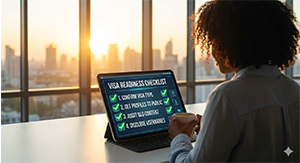
- Determine if you’re covered. Check the visa types above. If your visa (or that of a family member you sponsor) is on the list, you must prepare for social media review.
- Make your accounts public. Before submitting your application or attending your interview, set all your social media accounts to public viewing. Do this for every platform you’ve used, even rarely.
- Review your content. Go through all posts, photos, and comments from the past several years. Remove or archive anything that could raise questions (such as extremist or inflammatory content).
- Be truthful on applications. Fill out the DS-160 form accurately, listing each social media handle you have used in the past five years. Consular officers will verify consistency with what they see online, so omitting an account can cause problems.
- Prepare for interview questions. The officer may ask about anything they find online. Be ready to explain your posts or connections if asked.
- Consult if needed. If you have specific concerns (for example, if you have posted on sensitive topics or if you have accounts you don’t know how to manage), consider seeking legal advice. An immigration lawyer can help you understand your exposure and plan your disclosures.
Failing to comply can lead to visa delays or even denials, so it’s important to address this now. In summary, treat your social media as part of your visa application and take steps to make it review-ready.
Conclusion
The March 2026 rule significantly broadens the role of social media in U.S. visa screening. A dozen additional visa categories are now included in mandatory social media vetting.
Applicants in these categories should take this change seriously: adjust privacy settings, audit their online content, and be fully transparent with consular officers.
The core immigration rules have not changed, but as the State Department notes, each visa decision is a matter of U.S. national security. If you follow the guidance and prepare your application carefully, you will be in compliance.
The Law Offices of Anne Z. Sedki
The Law Offices of Anne Z. Sedki helps clients navigate U.S. immigration law. Our attorneys assist visa applicants, petitioners, and families in understanding and complying with complex requirements.
If you or someone you know will be applying for one of the affected visa categories (e.g. a fiancé(e) visa, a T or U humanitarian visa, etc.), we can review your situation and advise you on next steps.
Contact our office for a consultation. We’ll guide you through the process, including preparing for any social media vetting, so you can move forward with confidence.