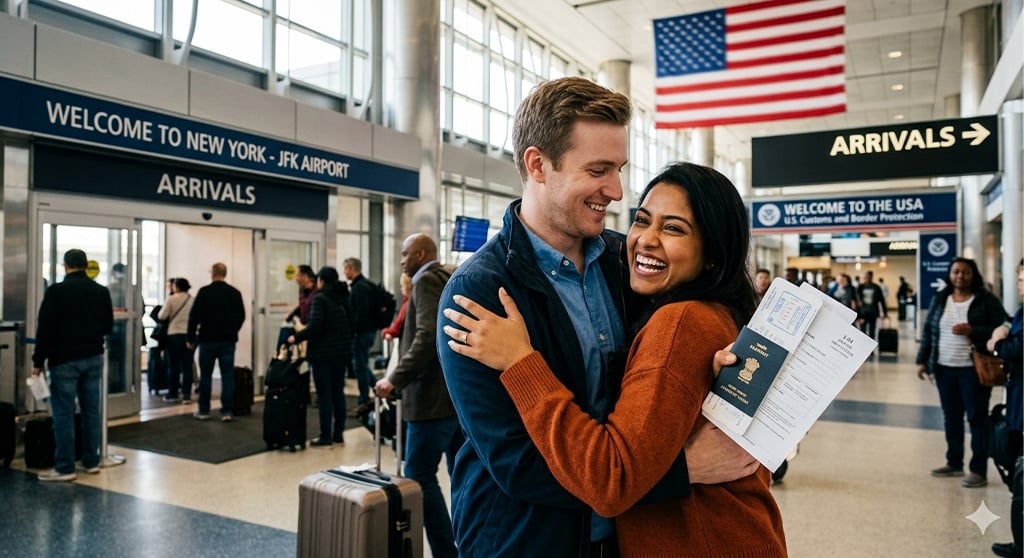
Imagine your partner on one knee, a ring in hand, and a K-1 fiancé(e) visa in your future. You’ve applied for the K-1 visa to join your spouse-to-be in the U.S. and start your life together – congratulations!
Along with the excitement, you probably have a big question in mind: can I work in the U.S. on a K-1 visa?
In this post, we’ll walk through everything you need to know. We’ll explain what a K-1 visa actually is, whether it by itself allows you to work, and exactly what steps you must take to get legal permission to work. Think of this as a friendly breakdown of the rules and timelines that affect you.
By the end, you’ll know how to navigate the system and when you can expect to be able to start a job.
What the K-1 Visa Entails
First, let’s be clear about what a K-1 visa is for. A K-1 fiancé(e) visa is a nonimmigrant visa meant specifically for the foreign fiancé(e) of a U.S. citizen. In simple terms, it’s a one-way ticket to the U.S. with a very specific purpose: to let you enter the U.S. and get married within three months.
As the U.S. State Department explains, the K-1 visa “permits the foreign-citizen fiancé(e) to travel to the United States and marry his or her U.S. citizen sponsor within 90 days of arrival”.
You and your fiancé(e) have to tie the knot within 90 days of your entry – that’s literally the whole point of the K-1 visa. In other words, you have three months to say “I do,” or you’ll have to leave.
The K-1 is not a green card and it’s not meant for long-term stays. It’s a short-term, single-purpose visa. You won’t get any extra privileges beyond marriage and adjustment of status. Don’t be surprised when officials tell you the K-1 is only good for marrying your sponsor – it’s literally designed that way.
Once you’re married, you (and any children you brought on K-2 visas) can immediately apply for a Green Card through Adjustment of Status. But until then, the K-1 simply lets you enter and marry.
Working in the U.S. on a K-1 Visa
Now to the heart of the matter: working. The K-1 visa does not automatically let you work. In fact, it’s more like a travel permit than a work permit, it doesn’t come with a “You can work” stamp.
What this means is that by itself, a K-1 visa gives you NO work rights. You can’t show up on day one and start clocking in. Instead, you must separately apply for a work permit.
The only way to legally work is to get an Employment Authorization Document (EAD) from USCIS. You’re only allowed to start working after USCIS approves your EAD. In other words, work is possible – but not without that separate EAD.
Technically, as soon as you enter the U.S. on a K-1 visa (before even marrying), you can file Form I-765 right away to request an EAD. U.S. immigration law does allow K-1 holders to do this.
However, there’s a big catch: timing. The K-1 visa is valid for only 90 days, and USCIS processing can be slow. This means the EAD you request might arrive after your K-1 visa has expired. In fact, many K-1 holders find a work permit request during the 90 days to be impractical as by the time USCIS actually approves the EAD, they may be right at the end (or even past) their 90 days.
So while it’s legal to apply for an EAD on K-1 status, it often isn’t very useful unless everything goes super fast – which it usually doesn’t. The K-1 period is just too short. For this reason, most people in your situation decide to focus first on marrying the sponsor and filing the green-card paperwork, and let the work authorization follow that.
How to Legally Work in the U.S. on a K-1 Visa
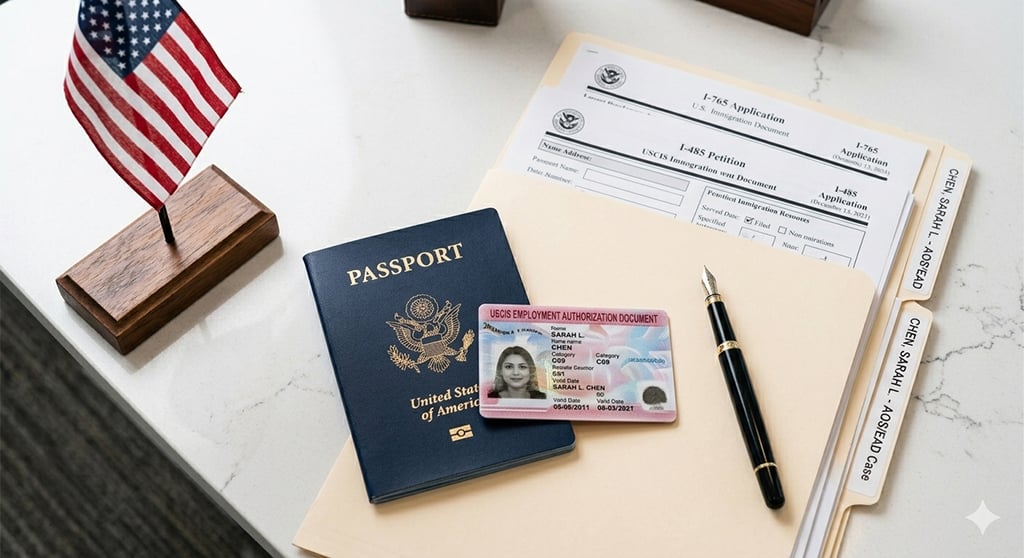
The good news is that you can absolutely work in the U.S. as a K-1 visa holder – but only after taking the right steps. The key step is marriage. You must marry your U.S. citizen fiancé(e) within the 90-day window, and then immediately apply for adjustment of status (a green card).
When you file the green-card application (Form I-485), you should also submit Form I-765 (for the EAD) at the same time. Once USCIS approves that EAD, you can start working – even before your green card is finalized.
Here’s how it works in practice:
- Marry within 90 days and file the paperwork. As soon as you say “I do,” your status changes from K-1 (nonimmigrant fiancé) to a pending immigrant (because you’ve married a citizen and applied for a green card). You then file Form I-485 (Adjustment of Status) with USCIS. You should include Form I-765 with your I-485 filing to request a work permit. Doing both together saves time.
- Wait for the EAD. After you file those forms, USCIS will process your work permit. As of early 2026, the agency typically takes about 4–8 months to approve a K-1-based EAD when it’s filed with an adjustment application. During this waiting period, you are not allowed to work. Once the EAD is approved and mailed to you, that document is what legally authorizes you to work.
- Receive your green card later. The green card application (I-485) itself usually takes longer, around nine months to over a year to process. In fact, you’ll almost certainly get your EAD long before your green card is approved. In practical terms, this means you’ll probably start working on your EAD some months before you become a permanent resident. Once you do get the green card, you can work freely without any permit (as a green card gives unrestricted work authorization).
To put this in a timeline (based on general processing times):
- First 90 days: Marry your U.S. citizen fiancé(e) and file the green card (I-485) and work permit (I-765) applications at the same time.
- ~4–8 months after entry: USCIS processes your I-765 and issues your EAD. At that point, you can start working legally.
- ~1 year after entry: USCIS approves your I-485 and issues your Green Card. Once that happens, you no longer need an EAD to work – you’re a lawful permanent resident.
The bottom line: if you follow the rules – marry on time and file all the paperwork – you can work in the U.S., legally and safely. Just be patient with the timing. In the meantime, it’s wise to avoid any employment until you have that EAD in hand. Working “under the table” or without authorization can jeopardize your future status.
Final Thoughts
We know this sounds like a lot, and it can feel stressful juggling wedding plans with immigration paperwork. It’s natural to be anxious to support yourself and start a new life together – trust us, many couples feel the same excitement and uncertainty at this stage.
Hang in there: the K-1 process is short-term by design, and yes, you will have to wait a bit before getting a work permit. But this waiting period is temporary, and it’s all geared toward getting you ultimately to a green card (and then to full legal work rights).
The key things to remember are: (1) the K-1 visa alone doesn’t let you work, so don’t try before you have an EAD; (2) you must marry within 90 days and file the adjustment/paperwork right away; and (3) once you do that, your work permit will almost certainly arrive well before your green card. It might seem slow, but these steps are meant to protect you and ensure everything is done correctly.
We know it can feel like watching the clock – but try to keep your cool. Soon enough, you’ll be side by side with your spouse in the U.S., and you’ll have that work permit card in hand. Until then, focus on enjoying this exciting phase and preparing for the next steps (like gathering all the documents you’ll need for your green card interview).
And remember: this post is intended to inform, not give you legal advice. Immigration law is complicated, and every situation has its own quirks. If you run into any doubts or tricky details about your case, please consult an immigration attorney for advice tailored to you.
The Law Offices of Anne Z. Sedki
If you have any questions about working on a K-1 visa, filing your adjustment of status, or any other immigration matters, we at The Law Offices of Anne Z. Sedki are here to help.
Our Garden City attorneys have guided many couples through the fiancé(e) visa and green card process. We understand how much this means to you, and we can make sure your paperwork is done right, help answer your questions, and keep things moving smoothly.
Don’t navigate this alone – reach out today for a consultation. Together we’ll make a plan to get you married, working, and on the path to a green card in the United States.