Table of Contents
What Is Asylum and Who Qualifies?
What is The First Step in the Asylum Process?
What Happens After You Submit Your Application?
The Asylum Interview: What to Expect
How Long Does the Asylum Process Take?
Possible Outcomes and What Happens Next
What This Means for You & Next Steps
Let The Law Offices of Anne Z. Sedki Help
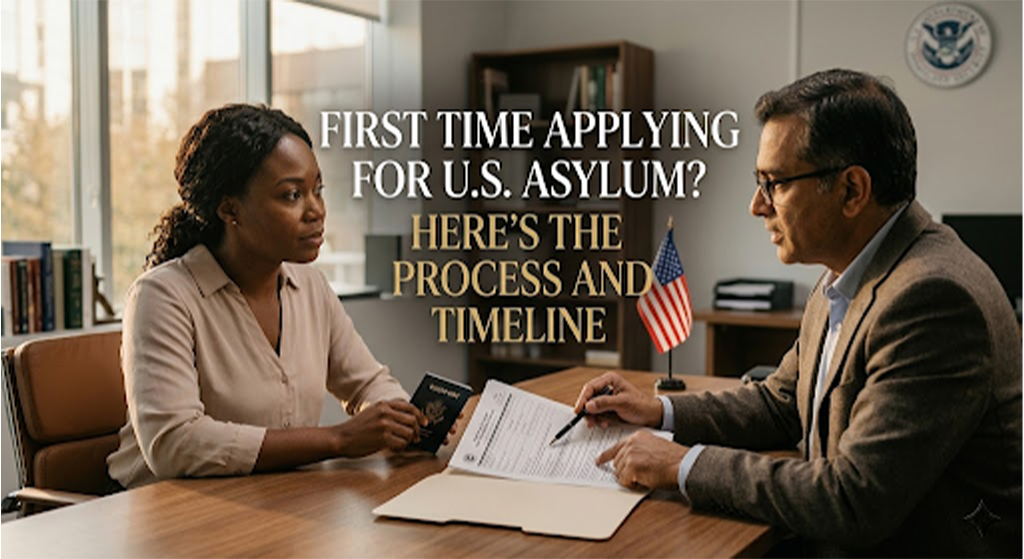
If you’ve fled persecution and are now in the U.S., applying for asylum can be your path to safety—but it’s a complex process. We’ll break it down step by step, from eligibility through the final decision, including expected wait times.
What Is Asylum and Who Qualifies?
In the U.S., asylum is a form of protection for people already in the country (or at a border) who meet the definition of a refugee.
In other words, you must show you were (or will be) persecuted on account of one of five protected grounds: your race, religion, nationality, membership in a particular social group, or political opinion. For example, if you faced violence or threats in your home country because of your ethnicity or political beliefs, you may qualify.
There’s a one-year filing deadline: you generally must submit an asylum application (Form I-589) within one year of your last entry into the U.S..
If you miss that deadline, your case will need a strong exception (such as changed country conditions or other special circumstances), because failing to file on time normally bars the claim. Also note there are certain bars to asylum (for example, if you committed certain crimes or persecuted others, you’d be ineligible).
Key points on eligibility: You must be physically in the U.S. or at a U.S. port of entry; you must show a well-founded fear of persecution on a protected ground; and you must apply (with limited exceptions) within one year of arrival.
Importantly, you should gather evidence that supports your story – such as identity documents, police or medical reports of attacks, affidavits from witnesses, news articles or human rights reports about your home country, and any other proof of threats you faced.
Your own detailed declaration (written in first person) will also be critical to explain what happened and why you’re afraid to go back.
What is The First Step in the Asylum Process?
File Form I-589
The first concrete step is to file Form I-589, Application for Asylum and for Withholding of Removal. If you are not already in removal proceedings, you file this affirmative asylum application with USCIS (United States Citizenship & Immigration Services).
USCIS allows filing online or by mail. (If you are already in immigration court, you would instead file with the court, but “first-time” applicants typically go the affirmative route.)
The form must be fully completed in English. Include your passport or other ID, your family details (including spouse/children, even if abroad), and your entire life story relevant to the claim. Be thorough: list every detail of harm or fear you experienced, no matter how small it seems, and clearly tie it to one of the protected grounds.
Along with the form, you must now pay a $100 asylum filing fee (this fee started in July 2025). USCIS provides a credit card or check/money order option (instructions are on the form). Make sure to use the correct lockbox address for asylum filings (USCIS posts this on its website) or the online portal.
Supporting documents
You should attach evidence and documentation to back up your claim. Common inclusions are: copies of passports or ID cards; birth certificates; marriage certificates; any police reports or medical records showing harm; letters from family or friends; newspapers or NGO reports about persecution in your country; photos of injuries or symbols of your protected group; and country condition reports from places like the State Department or UNHCR.
We recommend organizing exhibits in a logical order with an index. A good rule is: if it helps explain or prove part of your story, include it.
One frequent mistake is not submitting obvious support (e.g. omitting a police report or witness statement) – remember, the burden is on you to corroborate your story.
Common filing mistakes (to avoid)
Forgetting to sign or date the form, leaving blank fields, or failing to translate non-English documents are basic errors that can cause delays. Inconsistent or incomplete information (like giving different details on the form vs. your declaration) can hurt credibility.
Also, be sure to name all dependent family members (spouse/children) and include required fields like your U.S. address. If you write a separate declaration, keep it in first person (“I” statements) and stick to facts—do not include hearsay or exaggerated language.
What Happens After You Submit Your Application?
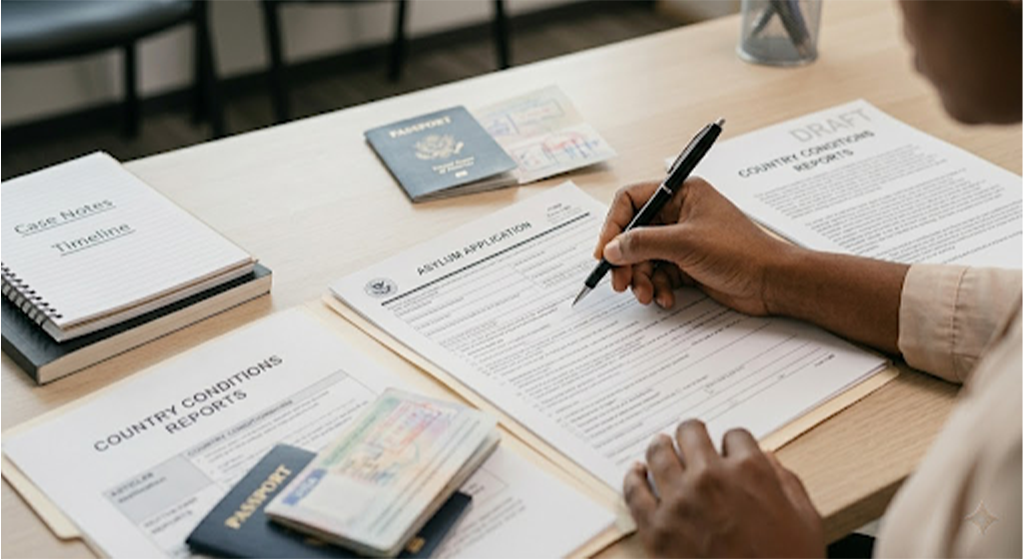
Once USCIS receives your I-589 package, they will issue a receipt notice (Form I-797C) confirming they got it. You’ll soon be scheduled for a biometrics appointment (fingerprints and photo) at a USCIS Application Support Center – usually that happens within a few weeks of filing.
Attend the biometrics appointment with your appointment notice and ID. USCIS will also conduct background and security checks after collecting your biometrics.
It’s important to keep USCIS updated if you move. Use Form AR-11 or the online portal to give your new address; missing a notice because of a move can be disastrous.
After biometrics, your case essentially “sits in line” for an interview. USCIS may send Requests for Evidence (RFEs) if something on your application needs clarification or is missing. Respond carefully and promptly if you get an RFE.
Applying for a Work Permit.
150 days after filing your I-589, you become eligible to apply for an Employment Authorization Document (EAD or work permit).In practice, you would file Form I-765 (Choice category (c)(8) for asylum applicants).
However, note that USCIS has been extremely backlogged on asylum EADs: as of 2026, many applicants waited years (over 1,200 days in some reports) for these work permits. Still, it’s worth filing at day 150, because once approved an EAD lets you work legally.
Remember, by law USCIS can’t issue the EAD until 180 days after your I-589 was filed. (As of 2026, USCIS even temporarily suspended taking new asylum EAD applications because of delays, though renewals are still accepted.)
The Asylum Interview: What to Expect
Eventually USCIS will schedule you for an affirmative asylum interview – this is the most critical step.
Scheduling can take a very long time. Offices in, say, Dallas or Phoenix might be somewhat faster than busier ones like New York or San Francisco. In many cases, people waited several years between filing and interview.
In fact, USCIS has been using a “last in, first out” interview method: newer cases get scheduled earlier, supposedly to deter weak applications. In short, if you filed years ago, it’s not unusual to still be waiting.
When your interview notice arrives, it will list the date, time, and location (usually a local USCIS asylum office) as well as what to bring. On interview day, dress professionally. Bring original documents that you included (passports, birth certificates, police reports, etc.) so the officer can review them.
Also bring a government photo ID. You and any attorney or representatives will sit with the asylum officer (interpreters are allowed if needed, but USCIS must provide and swear them in).
Typical interview questions
The officer’s goal is to verify your story and credibility. They will often start with basics: confirming your identity (name, DOB, family), your arrival date, and how you entered the U.S. In fact, they will ask about your entry date and check if you filed within one year.
Then they’ll dive into your claim. Expect questions like: “Why are you seeking asylum?”, “What happened to you in [home country]?”, and “Who harmed you or threatened you, and why?” They may quiz you on details from your written statement to ensure consistency.
Officers often use specific “test” questions to check credibility. For example, they might ask detailed questions about your claimed religion or social group to see if you truly understand it (e.g. “Who is the leader of your church? What is one practice of your faith?”). They may ask about geography or recent events in your country.
They also routinely ask yes/no screening questions about bars to asylum, such as any criminal history or whether you were ever part of any armed group or terrorist organization. It’s crucial to answer truthfully. If there are inconsistencies or gaps, be honest (“I don’t remember” or “I’m not sure”) rather than guessing – honesty is critical.
The asylum officer will carefully note your answers (and any emotional reactions, like crying).
At the end of the interview, your lawyer (if you have one) typically gets a chance to ask clarifying questions or make a brief closing statement. The officer will then let you know when and where to get the decision – often at the same office in a few weeks or months.
How Long Does the Asylum Process Take?
Prepare for a long wait. As of 2026, asylum processing times are measured in years, not months. In a recent analysis, the average affirmative asylum case took over 6 years from filing to decision. That’s true even if your case is straightforward. A main reason is sheer volume: USCIS saw a record backlog and massive intake (for example, about 454,000 asylum applications in FY2023 alone).
Several factors affect how long your case might take:
- Which asylum office handles you. Some offices (typically in areas with fewer cases) are faster. Others, like New York or Los Angeles, can have multi-year backlogs.
- Case age. USCIS uses a sort of “last in, first out” (LIFO) system for interviews. Surprisingly, that means newer cases get interview dates sooner than older ones. This is meant to deter applicants from filing weak cases just to get temporary benefits. The side effect is older cases often wait the longest.
- Meeting the one-year deadline. If you filed late, USCIS will issue a Notice of Intent to Deny and will need an explanation (an exception claim). This adds extra review time.
- Requests for Evidence (RFEs). If USCIS asks for more documents, your case will pause until you respond. Common RFE reasons include missing documents, unclear statements, or translation issues.
- Security checks. The FBI conducts background checks on every asylum applicant. Depending on your country of origin, these can add extra delays.
- If referred to court. (See below.) If your case goes into removal proceedings, you enter a separate, often even slower process.
Because of these delays, it’s vital to file correctly the first time and prepare thoroughly. Any mistakes or missing info can trigger RFEs or denials that send your case to immigration court, adding years more to wait.
Possible Outcomes and What Happens Next
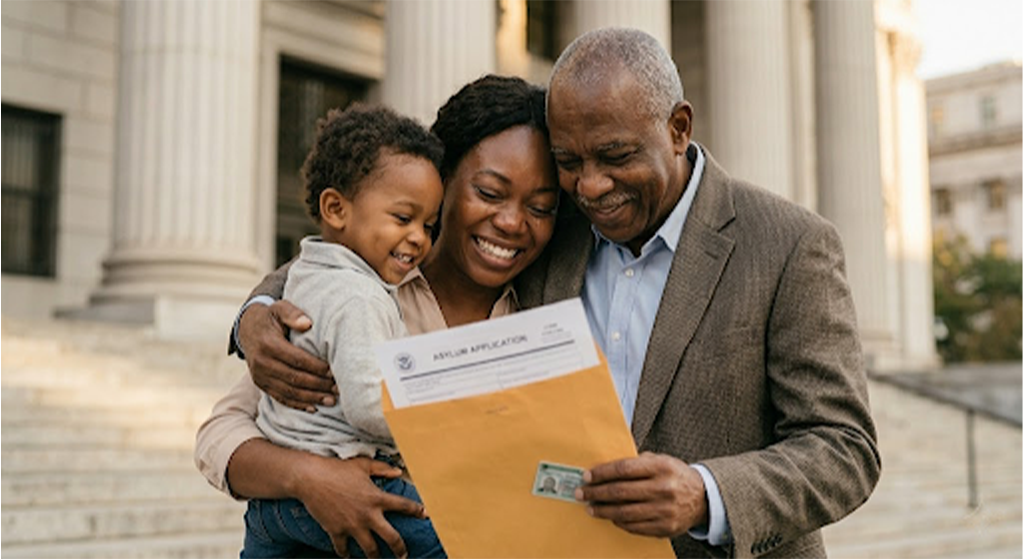
After the interview (or shortly after), USCIS will send a written decision. There are a few possibilities:
- Approval: If USCIS grants your asylum, you officially become an asylee. This means you can remain and work legally in the U.S.. As an asylee, you’ll be eligible for a Social Security number and may apply for a Refugee Travel Document (so you can visit abroad safely). Importantly, after one year in asylee status, you can apply to adjust to lawful permanent resident (get a green card) by filing Form I-485 (and there is no filing fee for asylees). After another four years as a permanent resident, you can apply for U.S. citizenship. Also, your spouse and unmarried children (if listed on your original application, or added via Form I-730 within two years) can get derivative asylee status, meaning they too can live and eventually become green-card holders.
- Referral to Immigration Court: If USCIS does not grant asylum and you have no other legal status, they will refer your case to an immigration judge (defensive asylum). This doesn’t mean you’ve lost your claim—it means you’ll have another chance to seek asylum in removal proceedings. In immigration court, the process restarts: you’ll get a notice to appear, go through Master Calendar hearings, and eventually a full merits hearing where you testify before a judge. Be aware that court backlogs can be very long (many applicants wait years for a final hearing). If the judge ultimately denies your asylum, you may have an appeal to the Board of Immigration Appeals (BIA). But often if your case reaches court, you should work closely with an attorney for the defense process.
- Denial: If USCIS denies your asylum and you have some other status (say, a visa or pending green card), they might simply close the asylum file. In that case, you could consider other immigration options. If denied and you have no status, you’ll usually be in court as above.
Throughout, keep track of deadlines (for example, appeals to AAO or BIA must be filed quickly). Also, once your asylum is pending or granted, USCIS cannot remove you to your home country.
What This Means for You & Next Steps
Applying for asylum is not just filling out a form – it involves telling a compelling, credible story under very close scrutiny. Stay organized: keep copies of everything you file, attend all appointments, and keep your address updated.
Continue gathering any new evidence or news about your country, especially if your case stretches out. Don’t travel outside the U.S. without first consulting a lawyer, as reentry could be complicated.
In practice, the asylum process is lengthy and often uncertain. You should prepare for a multi-year wait and think ahead: for example, file the work permit at 150 days, and check USCIS processing times periodically. Consider whether you meet any exceptions (like “changed circumstances”) if you filed late. If you have trusted family or community, lean on them for support during the wait.
Above all, double-check everything before filing. A thorough, well-documented application is your best chance to avoid delays or RFEs. Stay consistent in your story (your interview answers should match your written application). If possible, get help from a qualified attorney or accredited representative to review your paperwork.
Let The Law Offices of Anne Z. Sedki Help
Navigating asylum law and paperwork can be overwhelming — especially if English isn’t your first language or you’re not familiar with U.S. procedures. We’re here for you.
At The Law Offices of Anne Z. Sedki, our team in New York and New Jersey has helped many asylum seekers and immigrants secure legal status. We can assist with preparing your I-589, gathering evidence, representing you at the interview or in court, and planning your next steps.
Don’t wait until it’s too late: if you’re ready to apply for asylum or have questions about eligibility, deadlines, or strategy, reach out for a consultation. Our experienced immigration attorneys will explain your options clearly, help you avoid common pitfalls, and work to keep your family together. Remember — every asylum case is unique, and small errors can cause big setbacks. Let us help guide you through the process from New York or New Jersey.